Showing posts with label Book Reviews. Show all posts

Thursday, October 13, 2011

Stories

   
    I encourage my sons to read books. In the process, I noticed that some of the popular titles such as Big Nate and Diary of a Wimpy Kid may be amusing but they are not at all inspiring.

    As parents, it is important that that we guide our children and engage with them as they read. Reading then becomes an opportunity for teaching valuable life-lessons and spiritual insights, not merely for entertainment. Great stories help our children to understand that a spiritual world exists beyond the material world that they live in. It points them to the reality of God, who He is, what He is doing, and what He will do. They learn that the spiritual dimension helps give meaning and purpose to their lives here on earth. Author ND Wilson says:
"Feed your children stories that will keep their eyes wide with wonder when they look out their front windows or wander their yards. Feed them stories of joy and hardship and courage and tragedy and triumph. Give them heroes, real and imagined. Give them a taste for goodness, for truth, for beauty."
     Don't simply dismiss the power and wonder of stories. Ponder this: it is how God reveals his nature and his plan of redemption to persons like you and me. Someone said,
"The stories--the facts--give shape to the one we ought to worship. What God does shows who he is."
Read the Bible and you'll realize that it isn't a dry and boring book. Rather, it's full of fantastic and magical stories. Think of Moses rescuing Israel out from Egypt, Samson's amazing strength, Gideon's weaponless army of 300 men defeating the superior enemy, David slaying Goliath with a well-aimed pebble from a slingshot, Jonah in the belly of the whale, Isaiah's vision of God seated on His throne, the miracles and works of Jesus as told in the gospels, and many more stories in the Bible. There is no doubt that these are incredible stories but they were real events in history. They are not myths. These stories have a purpose and that is to demonstrate who God is and point us to his son Jesus Christ who "suffered once for sins, the unrighteous for the righteous, that he might bring us back to God (1 Peter 3:18). These stories are the foundation of New Testament theology. Read Paul's letters as well as the non-Pauline epistles. You will realize that their theology and doctrine largely come from Old Testament stories and the gospel accounts. In turn, these principles guide us in how to live as Christians who by grace are saved through faith in Jesus Christ. Ultimately, these stories greatly influence our practice in the kingdom of God.

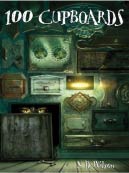
     By the way, ND Wilson writes children's adventure and fantasy novels. I met him at a conference last year - funny guy and a great writer. I've read a couple of his books. There is the 100 Cupboards trilogy, a story about a boy who discovers mysterious cupboards in his room and they turn out to be portals into other worlds. If you like the Chronicles of Narnia by CS Lewis then you will also enjoy the 100 Cupboards series. It's a great book for children as well as for grown-ups. And then there's Notes From The Tilt-A-Whirl which he describes as "a narrative nature of the world and the personality of the Poet behind it all." He has this gift of looking this world a little bit differently than we do in order to show how colorful and wonderfully complex our great God is and he writes it all down in this book. He also recently wrote about the relevance of stories in this post from Desiring God : Stories are Soul Food : Don't Let Your Children Hunger.

Tuesday, October 4, 2011

REVIEW|The Most Important Thing You'll Ever Study

    For a Christian family it is important that their children be educated in the Bible and trained to grow in knowledge and love for God's Word. Parents must not neglect this duty nor must they leave this responsibility to the local church. Rather, they must be an example for their children in studying Scripture and be competent to teach the very Word of God.

   A great resource for parents is the new, multi-volume set from Crossway titled The Most Important Thing You'll Ever Study by author and teacher, Starr Meade. It's a five-volume survey of the entire Bible designed for middle school and high school age kids. As a former youth ministry leader, I've searched for Bible study material for young teens and I can honestly say that there is nothing out there that is similar in content, breadth, and quality.

    It's a comprehensive, complete, and unique study guide. The treatment of all 66 books in the Bible is as rigorous and careful as typical science or math textbooks. It's the perfect resource for studying the Bible like the way kids study subjects such as Math or History. Yet it doesn't come across as too academic. It is faithful to emphasize the themes or main ideas of the text that is being studied. The questions help the kids to understand what they are reading and the author attempts to connect or fit what they read into the overarching story of the Bible. 

    One thing I've found helpful is the answer guide that is provided for parents and teachers so that they can understand the flow and content of each section. There is also a quiz provided at the end of each section with varied formats, i.e. multiple choice, complete the sentence, matching, that helps to evaluate the child's mastery of the subject. The author suggests ways that this set can be used: as a supplemental companion to Scripture reading or as a study guide for reading through the Bible from beginning to end. What I've found out lacking was life application questions so this is something parents or teachers must supplement on their own if needed.

    The apostle Paul says, "All Scripture is breathed out by God and profitable for teaching, for reproof, for correction, and for training in righteousness,that the man of God may be competent, equipped for every good work (2 Timothy 3:16-17)." When kids love Jesus and are captivated by the Word of God they will be established for life not just in this world but for all eternity. This Bible study guide and survey will help to bring kids in that direction.

Sunday, August 21, 2011

"Crazy Love"

    I found Francis Chan's book, "Crazy Love", three years ago as I was searching online for Bible study material that I could use for our small group. Up to that time, I've never heard of Francis Chan but I became curious and wanted to find out more about him because he was of Asian descent and because my mother's maiden name was also Chan. At one point, I wondered if he was a distant relative.

    Little did I know that God would use this book to wake me up from religious complacency. Francis Chan wrote like a prophet. He accurately describes a common spiritual malaise experienced by many Christians today - a "half-hearted, distracted, partially committed, lukewarm" kind of Christianity. That was me. I was a regular churchgoer, tither, and ministry leader. I lived a good and moral life. My life outside work revolved around involvement in many church programs and activities. But I did not truly enjoy God nor fully love Him. I thought that I did. My works seemed to show that I did. But when I examined and looked honestly inside me, I knew that I didn't. Don't get me wrong, I believed in Jesus Christ but I found it too hard to live this faith consistently. It was frustrating!

God used the book to show me what I was missing :

1. I had an inaccurate view of God.

   Francis Chan admits that he grew up believing in God without having a clue what He is like.
I called myself a Christian, was pretty involved in church, and tried to stay away from all of the things that ''good Christians" avoid -drinking, drugs, sex, swearing. Christianity was simple: fight your desires in order to please God. Whenever I failed (which was often), I'd walk around feeling guilty and distant from God. In hindsight, I don't think my church's teachings were incorrect, just incomplete. My view of God was narrow and small. 
-Crazy Love, p. 20

My experience was the same. The Bible shows us that we have an amazing, awesome, eternal God who loves us with an eternal, outrageous love. God loved us rebels and we are unworthy of his love. But God relentlessly pursued us to reconcile us back to himself through Jesus Christ his Son. I did not fully understand this in my life, hence my awe factor of God was small. I was living a "works righteousness" Christianity by generating a righteousness thru my own strength and effort so that God would approve of me. I thought that's how God loved me. Hence, I missed God's tremendous worth and power in saving me from the very thing that I was doing. I lacked the Biblical understanding of his grace. My inaccurate view of God and his love led me to miss the true meaning of the gospel.

2. I assumed that I was good soil.

   The concept comes from the parable of the sower that Jesus told (Mark 4) and also in a simile by the author of Hebrews (Hebrews 6:7-8). In college, I was a student leader with Campus Crusade for Christ. I led Bible studies and organized mission trips. I was actively involved in church. I experienced blessings from God but that did not necessarily prove that my heart was a good soil that produced good fruit. Instead of fruit, I was producing thorns and thistles and I was choking. Thorns are anything that distract us from God and chokes the fruit of righteousness that grows out of faith in Jesus Christ. We're choked by too much of the good life. This is especially true in the Western world where people are able to earn higher income and enjoy the blessings that come with economic prosperity. This comfortable lifestyle ends up becoming toxic by making us complacent. We become the sort of Christians that love and obey God so long as he doesn't impinge on our lifestyle. All this talk about radical Christian living, self-denial, taking your cross, self-sacrifice, and suffering for the gospel are major turn-offs. We'd rather hear preachers and read books that teach us how to be more comfortable, influential, and successful and have God be a benefactor of all these niceties of life.

    I was glad that the Holy Spirit had removed the scales in my eyes such that I could see my spiritual condition. Logically, the next question for me was,"What must I do?" It was through this book that I got introduced to John Piper. Francis Chan quotes him,
The critical question for our generation-and for every generation-is this: If you could have heaven, with no sickness, and with all the friends you ever had on earth, and all the food you ever liked, and all the leisure activities you ever enjoyed, and all the natural beauties you ever saw, all the physical pleasures you ever tasted, and no human conflict or any natural disasters, could you be satisfied with heaven, if Christ was not there?
-Crazy Love, p. 100

That question penetrated deep down my soul and exposed where my affections lay. The antidote to lukewarm, selfish, comfortable living is love. Francis Chan writes,


And isn't that what God wants of us-to crave this relationship with him, as we crave all genuine love relationships? Isn't that what brings him glory- when believers desire him and are not merely slaves who serve him out of obligation?
There is often a great disparity between how we feel about faith and how we are meant to feel. Why do so few people genuinely find joy and pleasure in their relationship with God? Why do most people feel they have to either pay God back for all he's done (buy his love) or somehow keep making up for all their inadequacies and failures (prove their love)?
-Crazy Love, p. 101

Because it's in our nature to always want to be in control of everything, we try to control even our faith. We try to muster more love for God and end up loving him out of obligation. Living this way, makes Christianity a boring, guilt-ridden chore!

    I recall praying something like this :

God I need you to help me to love you. I need your help to love my wife, children, parents, siblings, and my friends genuinely. From now on, I want to pursue loving you and delighting in you. Show me how awesome you are. Open the eyes of my heart to see how wide, how deep, and how great is your love for me.
   Right around that time, I started blogging. My first post was a reflection of his bigness as told by the universe that He created. The second post was my futile attempt at measuring his love that had no bounds. The third post was a listing of who I am in Christ - something I first learned way back in my days with Campus Crusade for Christ and one that I must remind myself daily. These were my first steps to falling in love with Jesus Christ to depths that I have never experienced before.

   Gradually, comfort was no longer living the good life but tasting and seeing that the Lord is good! Delight was no longer just a day at the movies or at an ice cream shop but became meditating on the Word of God regularly, wanting to know more of God and his infinite worth. I became dissatisfied with settling for less on Sundays : sermons that make God seem small and man big, a worship experience that seems to say to God, "Lord watch me worship you, you're gonna like it," rather than exalting God's majesty and greatness. For the past three years, I have seen this law at work : if I replace Jesus with something or someone else of lesser value, I will never be truly satisfied.

   On second thought, I am related to Francis Chan through our faith in Jesus Christ. We're brothers!
Friday, July 15, 2011

Dazzle Your Kids With Grace!

    Most parenting styles lie between two extremes. At one end is unstructured permissiveness. The other end is oppressive control. A permissive parent prefers to love and nurture but “spares the rod” and kids that are raised in this environment can be out of control, self-centered, and spoiled. An oppressive parent is harsh, abusive, and tyrannical that his children are discouraged, humiliated, provoked to anger, and living in constant fear. Both of these extremes are sinful and damaging to the lives of children (Proverbs 13:24, Colossians 3:21, Ephesians 6:4).


    Christian parents like me, being aware of this, are careful to maintain a balance of love and discipline. However, what passes as “Christian parenting” nowadays is really a syncretism of biblical principles with modern psychology. By and large, they are tips and principles on how to do our job right as parents so that our kids will become "good, law-abiding Christians" that are successful at whatever they do. This approach is limiting, perhaps dangerous, and can be just as damaging to children because they can become religiously obedient but still have spiritually unregenerate hearts. Kids raised this way will find no need of the gospel message, relying instead on self-righteousness and self-effort in living as Christians. And they won’t endure, with most leaving church and abandoning their faith by the time they grow into adulthood. This is all because the gospel message was obscured as they were growing up in a Christian environment.

    That is why I welcome the recent emergence of Christian literature on gospel-powered, gospel-centered parenting. Give Them Grace by authors Elyse Fitzpatrick and Jessica Thompson stands out by going against the syncretic paradigm found in many Christian parenting books. They show how the gospel radically changes all aspects of our parenting style because it shifts our parenting efforts away from changing our child’s behavior and towards the heart of the matter: the transformation of our child’s heart. We parents, have passed on to our children our idol-making, self-centered hearts and Jesus said that parents cannot will their kids to become Christians (John 1:12-13). Only God, by His grace, can transform their rebellious hearts through faith in Jesus Christ, and then they will obey and walk in the law of the Lord.

Monday, May 16, 2011

Book Review : ESV Seek and Find Bible

   Finally, a high-quality study Bible for kids! Think of the ESV Seek and Find Bible as the ESV Study Bible, kid version.

    In the ESV Seek and Find Bible, the well-regarded ESV text is combined with Bible stories, illustrations, and discussion questions that help children dig deeper into God’s Word. Over 130 Bible stories can be found throughout the book and, thankfully, are placed close to its original book chapter and verse so that they can be easily found. They were written with young readers in mind and they’re great for family devotions. Last Easter, my two sons took turns reading aloud the death and resurrection of Jesus Christ. That served as a springboard for priceless spiritual conversation with my children. They asked a lot of questions. What did the thieves do? How painful was it to be crucified? Why did Jesus die in the cross? Is he God? How did he rise again? Is Jesus really a king? A lot of theology was taught within that hour!


    Not only are the stories great for devotions, I was also pleasantly surprised that they are fully packed with solid Biblical theology. The writers made sure to connect the Old Testament stories to Jesus Christ. The story about Adam and Eve, for instance, ends with this explanation:

“Adam and Eve were the very first people to sin. They brought sin into the world. But God still loved them very much, and so He gave them the promise that one day a Savior would come. Many years later, God sent His Son, Jesus, to earth. Satan came to Jesus too, and tempted Him to disobey God, but Jesus did not listen to Satan. Jesus lived His whole life without sin. Then He suffered and died on the cross for the sins of the world and rose from the dead to give us eternal life.”
    Nowadays, parents are challenged to explain the gospel to their children. The ESV Seek and Find Bible will help to explain it in a language that children will understand. They’re never too young to know that they are sinful, to know the grace of God, and that by faith believe in Jesus Christ who saves them and transforms their hearts! I definitely recommend this to be the Bible that your kids should own and read as they grow in their faith.

    For more information about this book and other Crossway titles, go to : www.crossway.org/blog.

Monday, October 4, 2010

Early and Modern Church History Heroes of Faith

    There is nothing quite like The Church History ABCs (Crossway) by Stephen J. Nichols and Ned Bustard. For each alphabet, a story is told about a famous figure in church history whose name begins or ends with that letter - 26 heroes of faith from A to Z. The book is a mix of trivia, history, and vocabulary lessons, sprinkled with a dose of humor.

    My 9 year old son was at first attracted with the illustrations and started flipping through the pages. As he got to letter P (St. Patrick), he said "Oh, this is the guy in Veggie Tales!" That's about the extent of my son's knowledge in church history. I confess that I have not spent much time studying this subject either. So I only know little about these heroes of the Christian faith that have lived in early and recent church history. Certainly,a parent like me can learn from and do a lot with this book.

    The back contains a brief biography and details that help explain the sometimes odd illustrations. For example, Jonathan Edwards is drawn wearing a Native American headpiece and eating a Hershey chocolate bar. Why? And what's up also with the reference to spiders in his write-up? Answer is in the back of the book.

    The book's design and illustration is well-suited for 3 to 6 year olds. The stories and historical lessons in the write-ups are probably more suited for 7-12 year olds who are reading to learn rather than learning to read. My kids are in this age bracket so I used this book as a starting point for them to learn more about a famous figure in church history. The part about Jane Grey for instance, deserved a little more look-up beyond the book so we googled Jane Grey and learned some English history in the process. This is a unique children's book that would be a valuable addition in any home library. Supplementary activities can also be found at this website. More importantly, this book will help young hearts to know more about Jesus Christ and will spur discussions about faith.

    Until last weekend, I really did not comprehended the value of reading about church history and prominent church figures. Illumination came as I was listening to Burk Parsons during the Sunday morning devotional at the 2010 Desiring God National Conference. He shared his thoughts on this familiar passage in Hebrews :
 1Therefore, since we are surrounded by so great a cloud of witnesses, let us also lay aside every weight, and sin which clings so closely, and let us run with endurance the race that is set before us, 2looking to Jesus, the founder and perfecter of our faith, who for the joy that was set before him endured the cross, despising the shame, and is seated at the right hand of the throne of God.   -Hebrews 12:1-2 (ESV)
    This great cloud of witnesses, aka heroes of the faith, serve as great examples for the living. Their stories tell about their own personal race and how they finished well. Following their lead, we must also throw away besetting sin that wraps itself on us, causing us to stumble. We learn how they endured suffering and persecution by focusing on Jesus who is the author and perfecter of their faith. So for me, the value in studying their lives is that it points my eyes to Jesus Christ and the cross and keeps my eyes off my sinfulness. Thus, Hebrews 11 points us to Abel, Abraham, Sarah, Moses, and David, etc., but this great cloud of witnesses would surely also count Augustine, Hippolytus, John Calvin, Jonathan Edwards, Patrick, John Newton and countless others among them.