Sunday, January 1, 2012

Knowledge and Wisdom Part 2 : The Emptiness of Human Wisdom


Photo by Aldrin Muya
   All of us want to be wise. Having an education, being able to make the right decisions, and being able to solve problems does make us wiser and may improve our quality of life. However be aware that though it has value, human wisdom does not bring lasting happiness nor answer the meaning of life as we expect. It is very much like chasing after the wind. This was the grim conclusion of a man who endeavored to acquire wisdom and understanding in this world :

For in much wisdom is much vexation, and he who increases knowledge increases sorrow.

- Ecclesiastes 1:18 (ESV)

   The irony is the more you know, the more you will ache. For you will see that human progress and advancement is both a blessing and a curse. Even if everyone in this world were smart, hate, prejudice, adultery, murder, deceit, and many other evils will never be eradicated because human wisdom is powerless to transform the heart of man that is by nature morally corrupt.

    There are people who put their faith solely in their education and knowledge.They put their hope and trust in being raised well by their parents, attending good schools, receiving high marks, and getting a diploma but in the end, what does that really gain? This same wise man also said,

The wise person has his eyes in his head, but the fool walks in darkness. And yet I perceived that the same event happens to all of them. Then I said in my heart,“What happens to the fool will happen to me also. Why then have I been so very wise?” And I said in my heart that this also is vanity. For of the wise as of the fool there is no enduring remembrance, seeing that in the days to come all will have been long forgotten. How the wise dies just like the fool!

-Ecclesiastes 2:14-16 (ESV)

The fate of the fool and the wise is the same, hence human wisdom - this wisdom apart from God - is ultimately empty. This does not mean that we should abandon wisdom altogether. Rather, there is the right wisdom that we ought to recognize and embrace.

The beginning of wisdom is this: Get wisdom, and whatever you get, get insight.

-Proverbs 4:7 (ESV)

What we need to get is transcendent wisdom and insight. This is not man-made understanding. This wisdom comes from the all-wise, and all-knowing God.

Your commandment makes me wiser than my enemies, for it is ever with me. I have more understanding than all my teachers, for your testimonies are my meditation. I understand more than the aged, for I keep your precepts.


- Psalm 119:98-100 (ESV)


The fear of the LORD is the beginning of knowledge; fools despise wisdom and instruction.

-Proverbs 1:7 (ESV)

I've written previously that to fear the Lord is NOT to be filled with terror, despair, and dread before him. This kind of fear drives us away from God. Godly fear is best described as "reverence". It is the convergence of awe, adoration, veneration, wonder, honor, worship, confidence, and thankfulness that arises from recognizing God for who he is. It is an acknowledgment of his transcendent qualities, his absolute authority, and his supreme value. David Legge says,

It is a deep-seated humility, humble, poor of spirit, grounded upon an abiding awareness - totally in your mind and in your heart at all times is an awareness of absolute dependence for your very existence on, not just God, but the undeserved mercy of God. And only a heart like that, full of humility and dependence, is prepared to perceive and receive the wisdom that God gives!

    The fool is the one who in his pride, has no fear of God, rejects God, and despises God's wisdom and instruction. The fool trusts in his self-sufficiency, self-effort, and self-experience. He relies, according to John Piper, on the "wisdom of the world": the use of the human mind to achieve and maintain a ground for boasting before God and man. He may be wise and understanding in his own eyes and in the eyes of others yet he does not really see.  

The fool says in his heart, “There is no God.” They are corrupt, doing abominable iniquity; there is none who does good. God looks down from heaven on the children of man to see if there are any who understand, who seek after God.

-Psalm 53:1-2 (ESV)


Have you invested your life in the pursuit of human wisdom? Realize that it is a vain and empty quest, like chasing after the wind. Listen to the cry of another wise man :

The words of Agur son of Jakeh. The oracle.

The man declares, I am weary, O God;
    I am weary, O God, and worn out.

Surely, I am too stupid to be a man.
    I have not the understanding of a man.

I have not learned wisdom, nor have I knowledge of the Holy One.

Who has ascended to heaven and come down?
    Who has gathered the wind in his fists?

Who has wrapped up the waters in a garment?
    Who has established all the ends of the earth?

What is his name, and what is his son's name?
    Surely you know!

-Proverbs 30:1-4 9( ESV)

True wisdom begins with the knowledge of the Holy God who is all-wise and all-knowing. Divine wisdom can only be ours when we become humble, acknowledge our littleness, recognize the limits of our self-wisdom and understanding, and be willing to have our minds turned upside down.

More next time...

Thursday, December 29, 2011

Knowledge and Wisdom - Part 1

    Dr. Martin Lloyd-Jones offers a distinction between knowledge and wisdom.

1. The source of knowledge is study. The source of wisdom is discernment.

People get knowledge either by reading, listening to lectures, or by training. Education primarily gives knowledge. Wisdom, on the other hand, is not obtained in this way. Did you ever notice that there are people who study a great deal but not have wisdom for they lack discernment?

2. Knowledge can be obtained by conversation, talk and consideration. Wisdom is more intuitive.

There are some people who are just naturally wise. They may not have a lot of education but we go to them for advise. There are people who are knowledgeable but no one would go to them and ask their opinion because they are lacking in wisdom.

3. Knowledge is generally theoretical. Wisdom is practical.

Knowledge is concerned about knowing things for the sake of knowing them. Wisdom is concerned about life and living.

4. Knowledge has the mind acting apart from the will. In wisdom, the mind is acting in subservience to the will.

It is tragic to be a walking encyclopedia but so lacking in wisdom. All that stored knowledge counts for nothing when it is not applied in life.

    Now, I am not slamming knowledge. It isn't good to be lacking in knowledge. What I am saying is that knowledge alone does not make a wise person. This is how knowledge and wisdom work together : wisdom is the capacity to make use of the knowledge that you have and rightly apply it in life and and in work. Wisdom is knowledge fleshed out in living and in activity. It's "know-how".

    It's helpful to clarify this because God himself is infinitely knowledgeable and wise.

"Oh, the depth of the riches and wisdom and knowledge of God! How unsearchable are his judgments and how inscrutable his ways!"


-Romans 11:33 (ESV)

He does not say, "ooops"! "God is too wise to be mistaken," so the song goes. God isn't just the God who knows everything but everything that he does is unfathomably wise. This means that his purposes, his plans, and his works are perfect.  

    God demonstrates his wisdom and knowledge visibly. His creation manifests his wisdom. He puts the galaxies, stars, and planets in their proper place. He made earth habitable for man and all living things. He designed all kinds of creatures, trees, and plants. His plan of redemption shows that indeed his judgments are inscrutable. How could a holy God reconcile rebellious men to himself? By giving himself through his Son who would take on flesh and dwell among men, live a perfect life, offer himself as the sacrifice of atonement on the cross, and be raised to life to show that he has power over death and is victorious over sin, and would reconcile men to God as they repent and put their faith in his Son.

There shall come forth a shoot from the stump of Jesse, and a branch from his roots shall bear fruit. And the Spirit of the LORD shall rest upon him, the Spirit of wisdom and understanding, the Spirit of counsel and might, the Spirit of knowledge and the fear of the LORD.

-Isaiah 11:1-2 (ESV)

And because of him you are in Christ Jesus, who became to us wisdom from God, righteousness and sanctification and redemption,

-1 Corinthians 1:30 (ESV)

    And more to the point in just how he is infinitely more wise and knowledgeable - though humanity has progressed, the wisdom of this world is foolish by comparison (1 Corinthians 1:20). God is so transcendent that his ways are unlike your ways and his thoughts are unlike your thoughts (Isaiah 55:8-9). That is why in Proverbs you are urged to "trust in the Lord with all your heart and do not lean on your understanding" (Proverbs 3:5).

    God alone is wise and we can trust in him and rejoice in him at all times. Sometimes, it may seem as if he is hiding his hand and his path cannot be discerned. We may experience suffering and have trouble in this world, but in his wisdom, we can have confidence that he makes all things to work together for good (Romans 8:28). Nothing that happens in our lives is outside his purposes and his control. His understanding has no limit (Psalm 147:5) therefore he knows what he is doing. This is what makes him so glorious - because only he can bring good out of evil and turns beauty out of ashes.

    More next time....  

Saturday, December 24, 2011

God Gave The Greatest Gift of All!

    "For God so loved the world that he gave his one and only Son" (John 3:16). This is arguably the most well-known verse in the Bible. These few words capture the reason why the events that we now remember and commemorate during Christmas happened. Yet it is also misunderstood by many. Now God loves you and me, that part is clear. What we may fail to grasp is the condition of the object of his love. Indeed, those who do not understand this nor accept this will find no reason to believe in Jesus Christ.

   DA Carson explains,

What is God saying to the world? "World, I love you"? Is he saying, "World, your scintillating personality, your intelligent conversation, your wit, your gift - and you're cute! I love you! I can't imagine heaven without you." Is that what he's saying? In other words, when God says, "I love you," is he declaring the loveable-ness of the world? There are a lot of psychologists who use the love of God in exactly that way. If God says, "I love you," it must be that "I'm okay, you're okay; God says we're okay. He loves us; it must be because we're lovable."

Biblically that is a load of nonsense. The word "world" in John's gospel typically refers not to a big place with a lot of people in it but to a bad place with a lot of bad people in it. The word "world" in John's gospel is this human-centered, created order that God has made and that has rebelled against him in hatefulness and idolatry, resulting in broken relationships, infidelity, and wickedness. 
   -DA Carson (The God Who Is There)

    People who live in this world can never be categorized as naughty or nice. Left to itself, the world is by nature, morally bankrupt. John McArthur said,

The dark and ugly side of Christmas is sin...sin. The heart of Christmas is this, Christ came into the world to save sinners. Christ was manifest to take away sin. "You shall call His name Jesus for He shall save His people from their sin." And the real beauty of Christmas is to understand the ugliness that it cures.

    God loved this world not because it was lovable, adorable, and beautiful, but because he is that kind of God. God is holy, meaning, he is morally perfect. Think then about how this morally perfect Being would love. To love perfectly is to love the most unlovable of creatures who "did not honor him as God or give thanks to him, but they became futile in their thinking, and their foolish hearts were darkened" (Romans 1:21). That's us. He demonstrates his love to us by giving his Son, who through his death on the cross and his resurrection, made the way to save us from eternal wrath and reconcile us to God.

    Christmas is the favorite holiday for many because of the decorations, gifts, food, Christmas lights, Christmas trees, family gatherings, and merriment but these are all fleeting pleasures. For the greatest and most excellent pleasure that we can experience this Christmas is being astonished at the fact that God would actually love us! God did not condemn us with our sin but loved us in a wonderful, surprising way by giving us His Son - the greatest Gift of all.

Sunday, December 11, 2011

From Here To Eternity

    It seems like the first 40 years of my life went by so fast. I have now lived half of my expected average lifespan here on earth. This body is aging. Noticeable wisps of white hair, eyes not as good as they once were, and slowing reflexes are among the many signs of normal bodily wear and tear.


    Getting older should be put in a more positive light. After all, God designed our bodies this way. Aging is a gentle reminder from God that life in this earth is temporal. Man is like a mist that appears for a little while and vanishes (James 4:14). In our youth, we lived as though life would go on forever. By middle age, we have an increased awareness of our mortality thus leading us to take stock of what we have accomplished, what we still need to do, and what needs fixing.


    Even more significantly, aging forces us to think about eternity. A very wise man said,
Fear God and keep his commandments for this is the whole duty of man. For God will bring every deed into judgment, with every secret thing, whether good or evil.
-Ecclesiastes 12:14 (ESV)


    All human beings will account for their thoughts, words, and deeds in judgment before God. The final judgment is something that we do not like to think about, let alone think about everyday. It's an uncomfortable subject and a depressing topic of conversation. Yet Scripture says unambiguously that it will happen. For it is appointed for man to die once, and after that comes judgment (Hebrews 9:27) and for each man, there will either be acquittal or condemnation.


He will render to each one according to his works: to those who by patience in well-doing seek for glory and honor and immortality, he will give eternal life; but for those who are self-seeking and do not obey the truth, but obey unrighteousness, there will be wrath and fury. There will be tribulation and distress for every human being who does evil, the Jew first and also the Greek, but glory and honor and peace for everyone who does good, the Jew first and also the Greek. For God shows no partiality.
-Romans 2:6-11 (ESV)

    Yes, we are saved by grace through faith (Ephesians 2:8-9) but in the final judgment it is our deeds that will be judged. Our deeds will testify to the reality of our faith in Jesus Christ. Pastor John Piper clarifies,
It is by grace we are saved through faith; not of ourselves, it is the gift of God. But the heart that is full of faith will overflow in attitudes and actions very different from those which flow from unbelief. Therefore, our deeds will testify, truly to the genuineness or absence of faith, and it is not inconsistent for God to judge us according to our works. But we must understand that this judgment according to works does not mean we earn our salvation. Our deeds do not earn, they exhibit our salvation. Our deeds are not the merit of our righteousness, they are the mark of our new life in Christ. Our deeds are not sufficient to deserve God's favor, but they do demonstrate our faith. Please keep that distinction clear in your mind regarding our attitudes and actions: they do not earn, they exhibit; they do not merit, they mark; they do not deserve, they demonstrate.
All the self-seeking deeds and striving that we do : our accomplishments, our successes, our diplomas, our wealth are worthless in eternity - they do not earn us anything except death. Only the deeds that are the fruits of faith in Jesus Christ will matter.

    If there was no final judment awaiting us, there would be no need for Jesus to come, die on the cross, and be raised to life. Hence, no Christmas and no Easter. It is through the work of Jesus Christ that we are saved from wrath and fury in the final judgment. That is why Jesus came into the world in human flesh because we were sinners in need of saving from certain eternal death and we could not save ourselves.

There is therefore now no condemnation for those who are in Christ Jesus. For the law of the Spirit of lifehas set you free in Christ Jesus from the law of sin and death. For God has done what the law,weakened by the flesh,could not do. By sending his own Son in the likeness of sinful flesh and for sin, he condemned sin in the flesh, in order that the righteous requirement of the law might be fulfilled in us who walk not according to the flesh but according to the Spirit.
 -Romans 8:1-4 (ESV)

  So as this body becomes creaky with age, each ache and pain is a reminder of a judgment that's in store for us. Let's strive make the rest of our life count for eternity. As long as you're still alive and breathing, it's not too late.
The Lord is not slow to fulfill his promise as some count slowness, but is patient toward you, not wishing that any should perish, but that all should reach repentance.

-2 Peter 3:9 (ESV)

    The final judgment is nothing to fear about when you are in Jesus Christ. Do you know Jesus Christ? Respond in faith and repentance by acknowledging your helplessness and believe that Jesus Christ is Lord and that he will wash away your sins and make you right with God. Work out this faith that you profess by living in the power of the Holy Spirit, loving God and loving others, doing good, having the right mind and attitude, and finding satisfaction and pleasure in God.

Sunday, December 4, 2011

Noel Piper|Thinking About Santa

    Pastor John Piper's wife, Noel Piper, writes why they chose not to include Santa Claus in their Christmas celebrations.


    Sometimes, we are really far too easily pleased with inferior things. Why be satisfied with having our children place their Christmas hopes on a fictional character? Some may argue that it's just a harmless fantasy. The reality is that it does more harm than good because Santa is a wrong picture of God and His nature. I would not risk having my kids grow up having a distorted knowledge of God.

    While we can't avoid Santa Claus - he's in schools, he's seen in the mall, he'll be on TV commercials, and he's sung in Christmas carols, we can engage with our children and point them to the infinitely more superior Person of Jesus Christ. "Joy to the world, the Lord Is Come" is a far better song than "Santa Claus is Coming to Town". Jesus said, "Let the little children come to me and do not hinder them, for to such belongs the kingdom of heaven (Matthew 19:14)." Let this be our goal this Christmas - that instead of Santa, our children will have in their hearts true joy and delight in Jesus Christ who has come to bring the hope of salvation to mankind. As the hymn says,
Our hope is built on nothing less than Jesus' blood and righteousness.
I dare not trust the sweetest frame but wholly lean on Jesus' name.

Saturday, December 3, 2011

Bytes of Wisdom

    Dave Kraft shared these lessons from his blog, Leadership from the Heart. It was written by a leader and addressed to leaders. However, as I was reading it, I realized that much of the wisdom that was being shared is applicable to everyone. Here are a few nuggets:

1. Tough Decisions Become Tougher

This is true as you get older and have more responsibilities. What do you need to stop doing or start doing? People are sometimes paralyzed to take take action because they are afraid to make big mistakes. Dave Kraft points out that one's destiny isn’t a mystery. Your destiny is determined by the cumulative decisions you make. What tough decision do you need to make? What are you waiting for? Start taking the little steps and you'll get there.

2. Negativity is cancer. Kill it or it will kill you.

Christians ought to be the most positive people in the world. We place our faith in God who is for us, graciously gives us all things, works all things for good, and whose love for us is everlasting and stronger than anything in this world (Romans 8:31-39). We rejoice in the Lord always and give thanks in all circumstances (1 Thessalonians 5:16-18). Negativity is not of faith but is a symptom of unbelief. Indeed it is a cancer that will kill you. So kill it.

3. No Margin = No Vision.

Dave Kraft warns, "If you don’t control your calendar, your calendar will control you." A doctor once said,
"We must have some room to breathe. We need freedom to think and permission to heal. Our relationships are being starved to death by velocity. No one has time to listen, let alone love. Our children lay wounded on the ground, run over by our high-speed good intentions. Is God now pro-exhaustion? Doesn't He lead people beside the still waters anymore?" - Dr. Richard Swenson
We need to put margin in our lives. In the end, being overloaded and overworked accomplishes nothing. If we make no room for reflection and rest, it kills our creativity.

4. Don’t just dream big. Think long.

Dave Kraft points out :

We tend to overestimate what we can accomplish in 2 years, but we underestimate what we can accomplish in ten years. Zoom out. Your mantra shouldn’t be “as soon as possible.” It should be “as long as it takes.” Your vision isn’t just too small. It’s too short.


5. Work like it depends on you. Pray like it depends on God.

Dave Kraft says it so well :
Failing to plan is planning to fail. So plan away. And loving God with all of your strength = a great work ethic. So work hard. But I believe in prayer-storming more than brainstorming. Prayer is the difference between you fighting for God and God fighting for you. If work is the engine of success, then prayer is the high-octane fuel.

Thursday, November 24, 2011

The Parable of the Sports Fan

    I'm an avid sports fan. Baseball, basketball, football, and hockey - I follow them all. I have an app in my smartphone that gives me real-time updates with the scores, gives me instant game recap, and player statistics. All I ever watch on TV is a sporting event - regualr games, playoffs, championships, the World Series, the Super Bowl. I am elated when my team wins. I am deflated when my team loses. I know the players. I know who got traded, who got injured, and who got drafted. I love to look up individual player stats and team stats. I look up college recruiting websites and read about the most coveted high school recruits. I read the articles and op-eds at cnnsi.com and espn.com. I listen to sports talk on the radio while driving. I can talk sports with anyone - either at work or at parties. I am the typical, average sports fan.

    Martyn Lloyd -Jones observes,
Compare and contrast the typical average Christian with the typical average person of the world. The Christian claims that he is interested in spiritual things, and in the Kingdom of God and in a knowledge of God and of Christ. This is his claim. He says that he has faith and that is what faith means. Yet compare him with the average person who is interested in various games and the things that happen in the world of sport. You see the difference, there is nothing languid about the person who is interested in these things. Look at their excitement and their energy. Then look at the Christian by contrast, how languid he is, how apparently apologetic he is.
- Martyn Lloyd-Jones in Spiritual Depression

     If we are so easily pleased about inferior things in this world, how much more should we be delighted in God - the Creator of all things, the One whose glory is displayed by the skies above and by the creatures below. The God who gives us life. The God of grace. The loving and holy God who sends his Son Jesus Christ as to save us from our sins. The God who sends the Holy Spirit that leads us into all truth and makes us new.

    Pursuing pleasure in God is our highest calling. Maximizing our joy in God is what we were created for. We will be glorifying him by enjoying him forever. This is not hardcore Christian living. It's the norm.
You make known to me the path of life; in your presence there is fullness of joy; at your right hand are pleasures forevermore.
-Psalm 16:11 (ESV)

John Piper said: "Quit being satisfied with little 2-percent yields of pleasure that get eaten up by the moths of inflation and the rust of death. Invest in the blue-chip, high-yield, divinely insured securities of heaven. Giving your life to material comforts and thrills is like throwing money down a rat hole. But a life invested in the labor of love yields dividends of joy unsurpassed and unending - even if it costs you your property and your life on this earth."

Monday, November 21, 2011

Loving Your Spouse

    We attended two beautiful weddings this weekend. The first was held in a beautiful garden where a couple, who happen to be our friends, renewed their vows after 10 years of marriage and 2 kids. The next day, a young couple, also our friends, finally tied the knot after years of friendship. So, this post was naturally coming.

    The Biblical description of love in marriage can be defined with one word : sacrificial. "Love is willing self-sacrifice for the good of another that does not require reciprocation or that the person being loved is deserving," according to Paul Tripp.

Sunday, November 20, 2011

Holy Affections

"Though you have not seen him [Jesus], you love him. Though you do not now see him, you believe in him and rejoice with joy that is inexpressible and filled with glory, obtaining the outcome of your faith, the salvation of your souls."
 -1 Peter 1:8 (ESV)

    In my previous post, I wrote about how we experience spiritual misery. This passage from 1 Peter shows how Christianity is meant to be lived. This letter was addressed to the diaspora Jews who were living in Asia Minor and experienced suffering from persecution. According to Peter, the Christian life is filled with love, faith, and joy in Christ even in the midst of suffering, trial, or difficult circumstances. There is no confusion nor dissonance but a presence of joy "inexpressible and filled with glory". It seems so far away from a weak, dull, and lifeless religion that so many people experience today.

    Jonathan Edwards wrote, "True religion, in great part, consists in holy affections." And it must be so because a Christian possesses a heart that has been changed and this heart happens to be the seat of affections. What drives our actions depend in great part to where our affections lie. Jonathan Edwards describes it this way:
"We see the world of mankind exceedingly busy and active; and their affections are springs of motion: take away all love and hatred, all hope and fear, all anger, zeal, and affectionate desire, and the world would be, in a great measure, motionless and dead: there would be no such thing as activity amongst mankind, or any earnest pursuit whatsoever."
- Jonathan Edwards in Religious Affections

   Reading the Psalms, you will find many expressions of holy affections. Here's a few of them:

Psalm 27:4 (ESV) -
One thing have I asked of the LORD, that will I seek after: that I may dwell in the house of the LORD
all the days of my life, to gaze upon the beauty of the LORD and to inquire in his temple.

Psalm 42:1 (ESV) -
As a deer pants for flowing streams, so pants my soul for you, O God.

Psalm 63:1-4 (ESV) -
O God, you are my God; earnestly I seek you; my soul thirsts for you; my flesh faints for you, as in a dry and weary land where there is no water. So I have looked upon you in the sanctuary, beholding your power and glory. Because your steadfast love is better than life, my lips will praise you. So I will bless you as long as I live; in your name I will lift up my hands.

The apostle Paul shows his affections for Jesus Christ in many of his letters :

Philippians 3:8-11 (ESV) :
Indeed, I count everything as loss because of the surpassing worth of knowing Christ Jesus my Lord. For his sake I have suffered the loss of all things and count them as rubbish, in order that I may gain Christ and be found in him, not having a righteousness of my own that comes from the law, but that which comes through faith in Christ, the righteousness from God that depends on faith- that I may know him and the power of his resurrection, and may share his sufferings, becoming like him in his death, that by any means possible I may attain the resurrection from the dead.


    This is just a small list among countless expressions of desiring, loving, and thirsting after God in Scripture. Our affections are set upon Jesus Christ. We delight in Jesus Christ. We love Jesus Christ. All our Christian duty is happily rooted in this. Good works are the fruit of a heart that finds supreme satisfaction and pleasure in Jesus Christ.

"And as in worldly things, worldly affections are very much the spring of men's motion and action; so in religious matters, the spring of their actions are very much religious affections: he that has doctrinal knowledge and speculation only, without affection, never is engaged in the business of religion."
- Jonathan Edwards in Religious Affections

    This is why a weak, dull, boring, and lifeless Christian religion is so un-Christian. The lack of affections for God indicates that something is missing or something is out of whack. Don't be satisfied living in this way. Don't go through the motions. Love God with all your heart, mind, soul, and strength. As John Piper said, "God is most glorified when we are most satisfied in Him."

Tuesday, November 15, 2011

Cause and Cure For Spiritual Misery

    In his book, Spiritual Depression, Martyn Lloyd-Jones talks about miserable Christians and the reasons for their misery. We have, to varying degrees, experienced spiritual dryness. We continue go to church, pray, and serve but so lacking in passion and joy. What could be the possible causes of this condition?

Take a look at this list and see if any of these hold true in your life:

1. You have no clear understanding of the gospel

You know that Jesus is Lord and Savior but you do not see how he is Lord and Savior. You are not clear about the absolute necessity of the death of Christ. Neither are you clear about the doctrine of spiritual rebirth. You talk about these things yet you find that they are confusing. You are familiar with them yet you cannot truly see the truth about who you are in Jesus Christ.

2. Your heart is not fully engaged.

Though you pray and have read the Bible, you do not find happiness in Christianity and in the Christian position. You are not moved by it. You do not find joy in it. You find joy, if any, somewhere else. 

3. Your will is divided.

You renounce the old life and embrace the Christian life in general. Yet you find that Christianity constricting. Why does a Christian have to do certain things and stop doing others? You start arguing whether it is right for a Christian to do this or that. As a result there is no peace in the realm of the will.

The root of all these, according to Dr. Lloyd-Jones, is never fully accepting the teaching and authority of Scriptures. How great a tragedy it is to read the Bible but not knowing the truth contained in it and not applying its teachings in all of life. You embrace some of the Biblical teachings but continue to live portions of your life according to other ideas and philosophies from the world. You are not interested in doctrine and thus miss the truth contained in Scripture. Dr. Lloyd-Jones says,

"It is the doctrine that hurts, it is the doctrine that focuses things. It is one thing to look at pictures and to be interested in words and shades of meaning. That does not disturb, that does not focus attention on sin, nor call for a decision. We can sit back and enjoy that but doctrine speaks to us and insists upon a decision. This is truth, and it examines us and tries us and forces us to examine ourselves. So, if we start by objecting to doctrine as such, it is surprising that we do not see clearly."
A lack of harmony among musical notes turns music to noise that is painful to the ears. In the same way, spiritual misery comes because a tension exists in our lives resulting from the combination of two disharmonious or unsuitable elements.

    So surrender yourself to God. Submit fully to the authority of Scriptures. Hold on to its teachings and promises. Believe in the truth contained in it. Don't mix anything to them. Then you will see clearly. Then you will have passion and joy in your spiritual life.

    Dr. Lloyd-Jones concludes with this question, "Do you believe that the Son of God came from heaven and lived and did all He did on earth, that He died on a Cross and was buried and rose again, that He ascended into heaven and sent the Holy Spirit, in order to leave us in a state of confusion?" The answer, of course, is no! Jesus did not come to give us misery. He came to save us from our sins and give us life and have it more abundantly.

Tuesday, November 8, 2011

Repentance is for Christians Too

    Repentance (metanoia) means "change of mind". This change is more radical than we think. Charles Spurgeon describes, "It is an entire and total change of mind, a turning of the mind right round, so that it hates what once it loved and loves what once it hated—it forms different judgments from what it always did before—and no longer puts bitter for sweet, and sweet for bitter, darkness for light and light for darkness."

    Yet the act of repentance is misunderstood today. It's helpful to point out false forms of repentance and what true repentance is according to the Bible. You'll find that the phony kind of repentance is tolerated and even accepted by many people today. Now both John the Baptist (Matthew 3:2) and Jesus (Matthew 4:17) preached repentance saying, "Repent for the kingdom of God is at hand." Jesus also warned, "But unless you repent, you too will all perish (Luke 13:3)." Thus if repentance is a condition for belonging in the kingdom and if the eternal destiny of an individual hinges on it, then it is critical to understand what it really means.
   
WHAT IT IS NOT

1. Repentance and regret are not the same. Repentance does involve a feeling of regret but repentance is linked to moral deficiency while regret is not. For example, God regrets that he made Saul king (1 Samuel 15:10-11) but David repents of his adultery with Bathsheba (2 Samuel 11).

2. Repentance is not being sorry for sin because of the consequences that it brings to us. For example, King Saul repents from disobeying God hoping that his repentance can change God's mind about removing him from as king (1 Samuel 15). Neither is repentance feeling sorry because you got caught or that you failed to live up to your expectations.

 3. Repentance is not self-pity nor making excuses. When people make mistakes, they often admit that they're not perfect- thinking that it excuses their behavior. While it is true that no one is perfect, no sin is ever excusable to the God who is holy and perfect. Other excuses that people bring up instead of truly being broken and repentant over sin:

"I was just being honest."
"I'm just saying what I feel."
"I was only kidding."
"I misunderstood you."
"I didn't mean to do it."
"I'm having a bad day."

4. Repentance is not the atonement for sin. Penance and self-flagellation are forms of self-righteousness and that has never saved anybody. Displaying your misery does not earn the forgiveness of sins. Only the blood of Christ is the sacrifice of atonement that takes away God's wrath on us (Romans 3:25-26).

WHAT IT IS (List is excerpted from "The Gospel Powered Life")

1. Repentance is oriented towards God, not me.

King David realized that he had ultimately offended God with his sin. So he writes, "Against you, you only, have I sinned and done what is evil in your sight (Psalm 51:4)..."

2. Repentance is motivated by true godly sorrow and not just selfish regret.
For godly grief produces a repentance that leads to salvation without regret, whereas worldly grief produces death.
- 2 Corinthians 7:10 (ESV)

3. Repentance is concerned with the heart, not just external actions.

"Create in me a clean heart, O God, and renew a right spirit within me."
-Psalm 51:10 (ESV)

4. Repentance looks to Jesus for deliverance from the penalty and power of sin.

"Repent therefore, and turn again, that your sins may be blotted out, that times of refreshing may come from the presence of the Lord, and that he may send the Christ appointed for you, Jesus"
-Acts 3:19-20 (ESV)

   Now repentance isn't just a one time act that occurs when we receive Jesus Christ in faith. Repentance is for Christians too. It is the way in which we make progress in the Christian life. If we make an honest self-examination, we find that there are new sins to address. We discover sins beneath sins. There are new enemies that must be defeated. Tim Keller points out,  
"The more you see your own flaws and sins, the more precious, electrifying, and amazing God's grace appears to you. But on the other hand, the more aware you are of God's grace and acceptance in Christ, the more you are able to drop your denials and self-defenses and admit the true dimensions of your sin."
When repentance becomes a lifestyle, we live a life of faith as we rest solely on Jesus Christ's work that brings about forgiveness and grace.

Friday, November 4, 2011

Unfashionable Misfits

    Christians are not of the world yet they live in the world. Every moment of the day, we Christians deal with the tension that this brings to our lives. Tension arises because the ideas, fashions, trends, practices, philosophies, and opinions of this world will oftentimes contradict God's law. We do our best to be wise and discerning but we find that it's not easy. Writer and speaker Os Guinness comments,
Of all the cultures the church has lived in, the modern world is the most powerful, the most pervasive, and the most pressurizing.
-Os Guinness in Prophetic Untimeliness 

    It's hard to resist what the world has to offer today. Hence, we are hard-pressed to either take a stand or capitulate to the world's culture and practice. If we choose the former, we are unfashionable misfits that stand out but if we do the latter, we go astray in our faith and descend into worldliness. My professor in theology defines worldliness this way:

Worldliness is everything in a society that makes righteousness look strange and sin look normal.
    How does a Christian fall into wordliness? Os Guinness outlines four steps in this process and it is worth to look at it carefully:

Sunday, October 30, 2011

Change Inside Out, Not Outside in

    "He's gotten into some trouble but my boy has a good heart deep inside of him." This is what a father told me one time during a conversation. Another parent explained to me one time, "I know that my son stole your son's video game but that's not him because we didn't raise him up this way."

    We have all made this same rationalization in one form or another. It's a way of softening the impact of the sins we do before men and before God. The pattern goes like this : we admit that we're not perfect, that we make mistakes, and we commit sin from time to time but these are mere aberrations because deep down inside, we are basically good and our hearts are in the right place. This view treats sin as committing mistakes, making wrong choices, failing to live up to our potential or engaging in anti-social behavior. If we believe this to be true, then it's possible that we can improve ourselves and attain godly living by learning from our experience. Yet what the Bible says is completely different.
"The heart is deceitful above all things, and desperately sick; who can understand it?"
-Jeremiah 17: 9 (ESV)

"For out of the heart come evil thoughts, murder, adultery, sexual immorality, theft, false witness, slander."

-Matthew 15:19 (ESV)

That is the truth about our hearts. We cannot blame external influences such us our upbringing and culture for our wrongdoing. It proceeds from inside of us, not outside in. If we honestly look inside of us, our deepest thoughts, emotions and desires would be something like this:
"A fountain of pollution is deep within my nature. There are chambers of foul images within my being. I have gone from one odious room to another, walked in no-man's-land of dangerous imaginations, pried into the secrets of my fallen nature."
-The Valley of Vision

    Certainly we are capable to do good works and improve our behavior through our own efforts. Men may applaud us for it but God does not. For the righteous deeds from a corrupt heart are nothing but filthy rags (Isaiah 64:6). When we deny our sinful condition, we do not see the need for repentance and our minds are blinded from seeing and rethinking our true relationship to God. We also reject the gospel because the gospel says we're not good and consequently we completely miss the grace and mercy of God.

    No human effort, positive thinking, child-rearing techniques, and character building activities can transform the wayward and sinful heart. Many people claim that they have knowledge in how you can become a better you. Bookstores are filled with so many self-improvement books. Ultimately, this kind of "fix" is superficial like polishing up a car but not fixing the broken engine. It looks good on the outside but it's broken inside so it's still dead.

    Only God can change the heart. Godliness proceeds inside out, not outside in.


"But this is the covenant that I will make with the house of Israel after those days, declares the LORD: I will put my law within them, and I will write it on their hearts. And I will be their God, and they shall be my people."

-Jeremiah 31:33 (ESV)
"And I will give you a new heart, and a new spirit I will put within you. And I will remove the heart of stone from your flesh and give you a heart of flesh. And I will put my Spirit within you, and cause you to walk in my statutes and be careful to obey my rules."

-Ezekiel 36:26-27 (ESV)


  This is how real change happens :


"But to all who did receive him, who believed in his name, he gave the right to become children of God, who were born, not of blood nor of the will of the flesh nor of the will of man, but of God."
-John 1:12-13 (ESV)
"....We all once lived in the passions of our flesh, carrying out the desires of the body and the mind, and were by nature children of wrath, like the rest of mankind. But God, being rich in mercy, because of the great love with which he loved us, even when we were dead in our trespasses, made us alive together with Christ."

-Ephesians 2:3-5 (ESV)

    He who is spiritually dead can't help himself. "That which is born of the flesh is flesh, and that which is born of the Spirit is spirit (John 1:12)." Change comes by believing that Jesus Christ is the Son of the living God who has come to earth to bring the light of the gospel into the hearts of men. Receive Jesus Christ for who he is - Savior and Lord. Nothing is fixed in your life if you believe that Jesus is only a moral teacher, a divine therapist, or an inspirational speaker who came to improve your life. If that is Jesus to you, then you put him on the same plane as the human peddlers of self-improvement. Jesus came to crucify and bury your old life so that you might be raised with him with a new life - a new heart - as a child of God. Change the heart, change the behavior. Regeneration from the inside. This is how radical permanent change happens. This is how real progress happens. Inside out, not outside in.

For by grace you have been saved through faith. And this is not your own doing; it is the gift of God, not a result of works, so that no one may boast. For we are his workmanship, created in Christ Jesus for good works, which God prepared beforehand, that we should walk in them.
 -Ephesians 2:8-9 (ESV)

If we are able to change ourselves for the better then this passage would be a lie. When we are saved, we are regenerated into this new life brought about by a new heart and new pattern of thinking. And it is all the work of Christ in whom our life is now hidden. Inside out, not outside in.

Thursday, October 20, 2011

The Anti-Psalm 23

One way of getting insight into Scripture is to think of the antithesis of that passage.
Antithesis  is a counter-proposition and denotes a direct contrast to the original proposition. In setting the opposite, an individual brings out a contrast in the meaning (e.g., the definition, interpretation, or semantics) by an obvious contrast in the expression.

-Wikipedia

What would the antithesis of a well-loved passage such as Psalm 23 look like? From Justin Taylor's blog :


Antipsalm 23

I’m on my own.
No one looks out for me or protects me.
I experience a continual sense of need. Nothing’s quite right.

I’m always restless. I’m easily frustrated and often disappointed.
It’s a jungle—I feel overwhelmed. It’s a desert—I’m thirsty.
My soul feels broken, twisted, and stuck. I can’t fix myself.

I stumble down some dark paths.
Still, I insist: I want to do what I want, when I want, how I want.

But life’s confusing. Why don’t things ever really work out?
I’m haunted by emptiness and futility—shadows of death.

I fear the big hurt and final loss.
Death is waiting for me at the end of every road,
but I’d rather not think about that.

I spend my life protecting myself. Bad things can happen.
I find no lasting comfort.

I’m alone . . . facing everything that could hurt me.
Are my friends really friends?

Other people use me for their own ends.
I can’t really trust anyone. No one has my back.
No one is really for me—except me.
And I’m so much all about ME, sometimes it’s sickening.
I belong to no one except myself.

My cup is never quite full enough. I’m left empty.
Disappointment follows me all the days of my life.
Will I just be obliterated into nothingness?
Will I be alone forever, homeless, free-falling into void?

Sartre said, “Hell is other people.”
I have to add, “Hell is also myself.”
It’s a living death, and then I die.

Tuesday, October 18, 2011

Is Christianity a Psychological Crutch?

    It's a common objection raised against the Christian faith. Christianity is just a psychological crutch for the week, needy, and the fearful. In this view, God is a benevolent father figure for those who do not have the intellectual capacities nor the training to provide comfort and security for themselves. Two apologists point out the flaws behind this charge (links below). Several arguments are put forth so take time to read them carefully.

1. Ravi Zacharias International Ministries : Is Believing God a Psychological Crutch?

2.  Bethinking.org : Is Christianity Just a Psychological Crutch?

My take:

    Those who call Christianity a "crutch" are actually using this objection as a crutch so that they are freed from being held accountable for their sinful actions. It's their escape route to self-justification. It's a cover-up excuse for their refusal to accept the absolute sovereignty and moral authority of God over their lives.

     The God in the Bible is inscrutable. His ways are higher than our own. As I ponder about his sovereignty, his love, his holiness, and his justice and how that is fully all expressed in the saving work of Jesus Christ, he is certainly far more than the fatherly, Santa Claus-like caricature. God is not simple. This trinitarian, divine, Being whose name is a phrase ("I AM") cannot be put in a box. That is what makes Christianity a most intellectually and emotionally satisfying faith.

Monday, October 17, 2011

Sinclair Ferguson|God Finishes What He Starts


And I am sure of this, that he who began a good work in you will bring it to completion at the day of Jesus Christ.
-Philippians 1:6 (ESV)

   God is at work in the very first nanosecond of your belief in Jesus Christ; God is at work in changing your heart to believe on Jesus Christ, just as He was at work for your salvation from before the foundation of the world.

    God is at work in declaring you to be right with Him in accepting you in the righteousness of His Son, in pardoning and forgiving you of your sins. He’s at work in that. His initiative is involved.

    God is at work in your growing up to maturity in grace. Salvation is not something that starts with you and then continues with the work of God, nor does it start with God and then He says ‘OK, the rest is up to you.’

    Salvation from beginning to end, from start to finish, is the work of the sovereign grace of God, and so He is at work building you up in Christ, and He is at work one day to present you faultless before His throne with exceeding joy and great glory, in Jesus Christ, with all the saints, perfected.

    Conversion, justification, sanctification, glorification…that’s what those words are. They’re just code words so you don’t have to take as long as I just took to say all that you want to say.


- Sinclair Ferguson

Sunday, October 16, 2011

Are You Shaped By The Word or By The World?

"Blessed is the man who walks not in the counsel of the wicked, nor stands in the way of sinners, nor sits in the seat of scoffers; but his delight is in the law of the LORD, and on his law he meditates day and night."
"He is like a tree planted by streams of water that yields its fruit in its season, and its leaf does not wither. In all that he does, he prospers. The wicked are not so, but are like chaff that the wind drives away."
'Therefore the wicked will not stand in the judgment, nor sinners in the congregation of the righteous; for the LORD knows the way of the righteous, but the way of the wicked will perish."
-Psalm 1: 1-6 (ESV)

    We all need instruction in this life. Where do we get it? From whom do we get it? It's important to be discerning about this because wisdom can either come from the wicked or the righteous. Life on earth is full of trials, turmoil and uncertainty. So the last thing we need is listening to bad advice and getting the wrong counsel.

WHAT DO WE DELIGHT IN?

    We get our counsel from teachers that please us and from books that we love to read. We choose to be influenced by what we delight in. John Piper observes,
Nobody walks in the way of the wicked out of duty. Nobody stands in the way of sinners out of duty. Nobody sits in the seat of scoffers out of duty. We walk and stand and sit there because we want to. And we want to because we have been watching them so intently that what they do is now attractive.
    The counsel of the world is pleasing to our ears and appealing to our eyes. Why? Because the wisdom of this world is centered on us. How can we get rich? How can we find happiness, success, and fulfillment? How can we raise great kids? How do we have a great marriage? We all want this for ourselves and we're willing to spend money and listen to those who can show us how to get there. In short, the world's wisdom is powerfully appealing to our corrupted hearts.
   
     God desires that we walk in holiness and find our enjoyment and delight in Him. The Psalmist proclaims right at the start that blessed (or happy) is the man who delights in God's instruction and regularly meditates on His law. When we do this, we experience a blessedness from God that is not given to those who walk in the way of sinners.

THE BLESSEDNESS OF KEEPING GOD'S LAW

   God's Word is so valuable that it is more desirable than fine gold and there is great reward in keeping them (Psalm 19:10-11).

The law of the LORD is perfect, reviving the soul;
 the testimony of the LORD is sure, making wise the simple;
 the precepts of the LORD are right, rejoicing the heart;
 the commandment of the LORD is pure, enlightening the eyes;
 the fear of the LORD is clean, enduring forever;
 the rules of the LORD are true, and righteous altogether.
-Psalm 19:7-9 (ESV)
  
    The instruction of the Lord is good and perfect. Far from being dry and boring, it is sweeter than honey from the honeycomb (Psalm 19:10). It preserves our lives, it revives our souls, and it uplifts our hearts. Just as water from the great river makes the tree that lie on its banks verdant and fruitful, meditating on God's Word brings fruitfulness and health in our spiritual life.  Regular meditation of God's Word firmly establishes our feet, keeps us away from making harmful decisions, and provides the stability that we need in times of struggle and trials.
If your law had not been my delight, I would have perished in my affliction. I will never forget your precepts, for by them you have given me life.
-Psalm 119: 92-93 (ESV)

    If it has this much value and importance, then why does our Bible gather dust in the bookshelf? How much worth do we put in reading the Bible? How much effort do we spend in meditating God's Word? Do we look forward to it or is it such a drudgery to read it that we just want to hurry up and finish it? Does it occupy much of our daily thinking and reflection? How barren and thirsty is the Christian who does not constantly draw water from God's Word.

THE FATE OF ONE WHO DELIGHTS IN THE WORLD

    The ungodly are not like trees planted by streams of water, rather they are like chaff that the wind drives away. There is no stability, vibrancy, life, nor reward when our thinking is shaped and influenced by the world. The end result is death and judgment. Why is this so?


But if you have bitter jealousy and selfish ambition in your hearts, do not boast and be false to the truth. This is not the wisdom that comes down from above, but is earthly, unspiritual, demonic. For where jealousy and selfish ambition exist, there will be disorder and every vile practice.
-James 3:14-16 (ESV)

   The world's wisdom feeds our selfish desires. And when we live like this, we might be temporarily rewarded but the end-result is destruction. For God brings judgment and wrath on the ungodly. Charles Spurgeon describes the situation of the ungodly this way,
The Lord knoweth the way of the righteous. They are like the planted tree. Not so, ye that are ungodly, not so ye; there is no special providence for you. To whom will ye carry your troubles? Where is your shelter in the day of wrath? Where is your shield in the hour of battle? Who shall be your sun when darkness shall gather about you? Who shall comfort you when your troubles shall encompass you round? You have no eternal arm to lean upon. You have no compassionate heart to beat for you. You have no loving eye to watch you. You are left alone! Alone! Alone!
So the question to you is are you shaped and influenced by the world or by the Word of God?

Thursday, October 13, 2011

Stories

   
    I encourage my sons to read books. In the process, I noticed that some of the popular titles such as Big Nate and Diary of a Wimpy Kid may be amusing but they are not at all inspiring.

    As parents, it is important that that we guide our children and engage with them as they read. Reading then becomes an opportunity for teaching valuable life-lessons and spiritual insights, not merely for entertainment. Great stories help our children to understand that a spiritual world exists beyond the material world that they live in. It points them to the reality of God, who He is, what He is doing, and what He will do. They learn that the spiritual dimension helps give meaning and purpose to their lives here on earth. Author ND Wilson says:
"Feed your children stories that will keep their eyes wide with wonder when they look out their front windows or wander their yards. Feed them stories of joy and hardship and courage and tragedy and triumph. Give them heroes, real and imagined. Give them a taste for goodness, for truth, for beauty."
     Don't simply dismiss the power and wonder of stories. Ponder this: it is how God reveals his nature and his plan of redemption to persons like you and me. Someone said,
"The stories--the facts--give shape to the one we ought to worship. What God does shows who he is."
Read the Bible and you'll realize that it isn't a dry and boring book. Rather, it's full of fantastic and magical stories. Think of Moses rescuing Israel out from Egypt, Samson's amazing strength, Gideon's weaponless army of 300 men defeating the superior enemy, David slaying Goliath with a well-aimed pebble from a slingshot, Jonah in the belly of the whale, Isaiah's vision of God seated on His throne, the miracles and works of Jesus as told in the gospels, and many more stories in the Bible. There is no doubt that these are incredible stories but they were real events in history. They are not myths. These stories have a purpose and that is to demonstrate who God is and point us to his son Jesus Christ who "suffered once for sins, the unrighteous for the righteous, that he might bring us back to God (1 Peter 3:18). These stories are the foundation of New Testament theology. Read Paul's letters as well as the non-Pauline epistles. You will realize that their theology and doctrine largely come from Old Testament stories and the gospel accounts. In turn, these principles guide us in how to live as Christians who by grace are saved through faith in Jesus Christ. Ultimately, these stories greatly influence our practice in the kingdom of God.

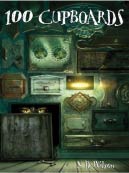
     By the way, ND Wilson writes children's adventure and fantasy novels. I met him at a conference last year - funny guy and a great writer. I've read a couple of his books. There is the 100 Cupboards trilogy, a story about a boy who discovers mysterious cupboards in his room and they turn out to be portals into other worlds. If you like the Chronicles of Narnia by CS Lewis then you will also enjoy the 100 Cupboards series. It's a great book for children as well as for grown-ups. And then there's Notes From The Tilt-A-Whirl which he describes as "a narrative nature of the world and the personality of the Poet behind it all." He has this gift of looking this world a little bit differently than we do in order to show how colorful and wonderfully complex our great God is and he writes it all down in this book. He also recently wrote about the relevance of stories in this post from Desiring God : Stories are Soul Food : Don't Let Your Children Hunger.

Tuesday, October 11, 2011

Skies and Landscapes

I was reflecting on Psalm 19:1-7 tonight. I also happened to come across this video from a blog and I marvel at how it perfectly captures the reflections of the Psalmist.

The heavens declare the glory of God, and the sky above proclaims his handiwork.
Day to day pours out speech, and night to night reveals knowledge.
There is no speech, nor are there words, whose voice is not heard.
Their voice goes out through all the earth, and their words to the end of the world.
In them he has set a tent for the sun, which comes out like a bridegroom leaving his chamber, and, like a strong man, runs its course with joy.
Its rising is from the end of the heavens, and its circuit to the end of them, and there is nothing hidden from its heat.
-Psalm 19:1-7 (ESV)


Landscapes: Volume Two from Dustin Farrell on Vimeo.

    This is what the heavens are proclaiming everyday, 24x7, and it never stops declaring the glory of its Creator. This is what they were made for. This is their ministry: to communicate to us that there is a God.

    What about you and me? Perhaps we're preoccupied with building our own glory and kingdom. Hence, we're too busy to notice the infinitely glorious majesty of God that is being spoken out around us at each moment. Stop looking at yourself. Nothing good and glorious is in there. Look around you. Look up to the skies. Notice the blinding light from the sun and feel the heat that it generates. That's the handiwork of God.

    Now join with the heavenly chorus!

Monday, October 10, 2011

KEVIN DEYOUNG|The Villain With A Thousand Faces

Kevin DeYoung :
"Sin is in every human heart. It is the villain with a thousand faces."
"Even as Christians we find ways to avoid the word sin. We will speak of our imperfections, our flaws, our inadequacies, our dysfunctions, our weaknesses, our insecurities, and our growth edges. But how often do we call sin “sin”?"

"For sin may have a thousand faces, but salvation has only one."


Read more from his blog at the Gospel Coalition.